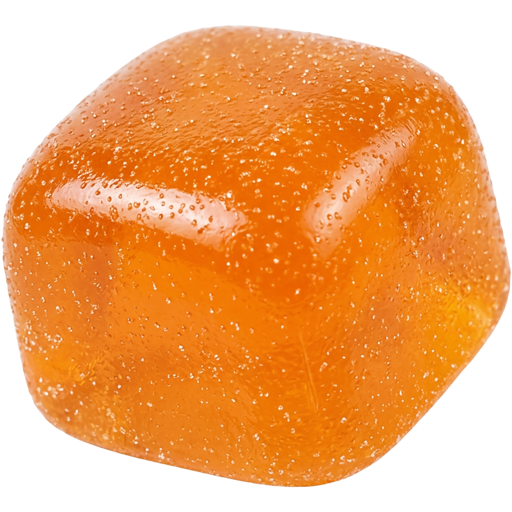
The short answer
Pectin is a natural plant fibre found in fruit cell walls, mostly extracted from citrus peel and apple pomace. In gummies it is the gelling agent: when cooked with sugars to high solids and acidified, it sets into a firm, short-textured gel. It is plant-based, labelled as E440 in the EU, and the most common alternative to gelatin in vegan and gelatin-free gummies.
Pectin in one paragraph
Pectin is a complex carbohydrate (a polysaccharide built mainly from galacturonic acid) that sits in the cell walls of almost every fruit and vegetable, where it acts like a glue that holds plant cells together. It is why ripe fruit softens, and why jam sets. For the food industry, pectin is a soluble dietary fibre and one of the most widely used plant-based gelling agents for jams, fruit preparations, dairy desserts and — increasingly — gummies.
Where commercial pectin comes from
Commercial pectin is almost always extracted from by-products of the juice industry. Citrus peel (orange, lemon, lime) has a high pectin content and gives a light, neutral-tasting powder; apple pomace is the second major source. The raw material is extracted in hot, acidified water, filtered, precipitated (usually with alcohol), dried and milled to a standardised powder.
Because pectin comes from fruit residues that would otherwise be discarded, it fits well into upcycling and plant-based sustainability stories — although any environmental claim on a pack must be substantiated for the finished product.
HM, LM and amidated pectin
Pectins are grouped by their degree of esterification (DE) — the share of acid groups carrying a methyl ester. The type decides how and when the pectin gels, which is why choosing the right pectin is the first decision in any gummy formulation.
- High-methoxyl (HM) pectin (DE above 50 %): gels at high soluble solids — typically above 60 % — and low pH, around 3.0–3.6. This is the classic choice for confectionery gummies and jellies. Rapid-set and slow-set grades let producers control how quickly the mass gels after acid is added.
- Low-methoxyl (LM) pectin (DE below 50 %): gels through calcium bridges rather than sugar, so it works at lower solids. Useful in reduced-sugar systems and fruit preparations.
- Amidated LM pectin: chemically modified LM pectin that is more tolerant to calcium and gives thermo-reversible gels. Still labelled as E440 in the EU.
How pectin gels in a gummy
In a classic HM pectin gummy, three factors work together: dissolved pectin, a high concentration of sugars (which pull water away from the pectin chains) and acid (which reduces the electrical charge on the chains so they can bind). When the hot, concentrated mass is acidified and cools, the chains form a three-dimensional network that traps water and sugar — the gel.
Pectin gelling is largely irreversible once set. This gives pectin gummies their typical heat stability, but it also means timing on the line is critical: acid is usually dosed just before depositing, often with buffer salts such as sodium citrate to slow the set.
Pectin vs gelatin vs starch in gummies
Gelatin is an animal protein that melts close to body temperature and gives an elastic, chewy texture. Starch gives a denser, softer chew and is often combined with other hydrocolloids. Pectin sits between them: a short, tender bite that breaks cleanly, with a fast and bright flavour release that suits fruity and sour profiles.
- Origin: pectin is plant-based; gelatin is derived from pork, beef or fish.
- Heat stability: set pectin gels generally tolerate warm transport and storage better than gelatin.
- Texture: pectin is short and clean; gelatin is elastic and chewy.
- Positioning: pectin supports vegan, vegetarian, halal-friendly and gelatin-free briefs — subject to all other ingredients and certification.
Pectin on EU labels: E440
In the EU, pectins are authorised food additives under Regulation (EC) No 1333/2008 and listed as E440, covering both pectin and amidated pectin. On an ingredient list it may appear as “pectin”, “gelling agent: pectin” or “gelling agent (E440)”. Pectin is generally permitted at quantum satis in confectionery, meaning no fixed maximum beyond good manufacturing practice.
Pectin is also a soluble dietary fibre. However, the small quantity needed to gel a gummy rarely supports a fibre claim on its own — fibre claims need dedicated formulation, as covered in our guide to EU sugar-free and fibre claims.
Why brands choose pectin gummies
Demand for pectin gummies has grown with plant-based eating, gelatin-free positioning and the expansion of gummies beyond children’s confectionery into adult treats and functional formats.
- A plant-based gelling agent for vegan and gelatin-free claims (when the full recipe qualifies).
- A clean, short bite that consumers associate with premium fruit gummies.
- Good heat stability for warmer markets and e-commerce shipping.
- Strong flavour release for fruit, sour and botanical profiles.
- Compatibility with sanded sugar, sour powder and wax finishes.
Where Nordic Pectin fits
Rather than selling raw pectin only, Nordic Pectin offers three ready pectin gummy systems — Classic, Zero and Fiber — plus food-grade pectin and related hydrocolloids for producers who run their own recipes. Each system is kept separate, with its own specification sheet and certificate of analysis per lot on request, so your product developer, buyer and labelling team work from the same facts.
The fastest way to understand how pectin behaves in your product is to taste and test it. Request samples from one system, and we will reply with a sample plan and an indicative EUR quote.
Questions buyers ask
Is pectin vegan?
Pectin itself is plant-derived. Whether a finished gummy is vegan depends on all of its ingredients, processing aids and coatings — for example, beeswax or shellac would not be vegan.
Is pectin a fibre?
Yes, pectin is a soluble dietary fibre. The small amounts used to gel a gummy rarely support a fibre claim on their own; a fibre claim needs a dedicated formulation such as our Fiber system.
What is E440?
E440 is the EU additive number for pectins, covering both pectin and amidated pectin.
Is pectin the same as gelatin?
No. Pectin is a plant carbohydrate; gelatin is an animal protein. They gel by different mechanisms and give different textures.
Which pectin is used in gummies?
Most confectionery gummies use high-methoxyl pectin, often a slow-set grade buffered to control setting on the depositor. Reduced-sugar recipes may use LM or amidated pectin.
Is pectin halal?
Pectin is plant-derived, but halal status depends on certification of the finished product and its full ingredient list.
General information for business buyers, not legal or regulatory advice. Confirm claims and labelling for each finished product and market.